
Gaoxin Pump
Service and support
Selection support before the order, installation and commissioning during start-up, and wear parts with follow-up for the life of the pump.
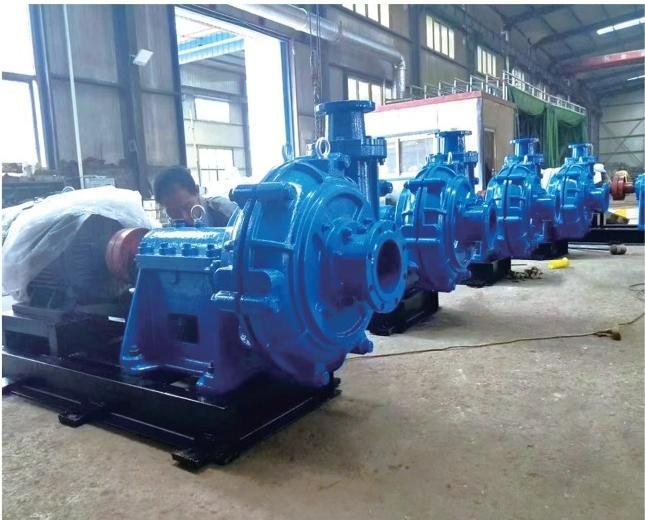
A pump is only part of the answer; the selection behind it and the support after start-up decide how long it runs. Our service work is organised in three stages.
Before the order
- Product information and selection data for every series in the range
- Selection and design advice from engineers who work with these pumps daily
- Recommendation of the series and wetted-part material that fits your duty — including special designs and modified hydraulics for difficult installations
- Drawings, performance curves and material data for approval
During installation and commissioning
- Technical support to confirm the installation and pipework arrangement
- Operator training and guidance on installation and maintenance
- Commissioning support through to first delivery, with test data recorded
- Delivery against the agreed contract schedule
After handover
- Wear parts, impellers and liners supplied to the original drawing
- Scheduled inspection and follow-up on installed units, on site or remotely
- A named contact for service requests, with each visit recorded on a service sheet signed by the customer
- Replacement pumps and upgrades for units that reach the end of their economic life
When a pump misbehaves
Most slurry pump problems fall into a small number of patterns. The table below is the fault-finding guide from our catalogue; it covers the usual causes of low flow, lost suction, vibration, short packing life and motor overload.
| Symptom | Usual cause | What to check first |
|---|---|---|
| No discharge, gauges fluctuating | Suction line not primed; blockage; air ingress at the gland or instrumentation | Prime the pump, clear the suction line, check the packing is wet and correctly compressed |
| No discharge, high vacuum reading | Suction valve closed or silted; suction resistance too high; lift too great | Open and clear the valve, review the suction layout, reduce the installation height |
| No discharge, pressure gauge shows pressure | Discharge resistance too high; impeller blocked; speed too low | Check the discharge line, clear the impeller, verify the drive speed |
| Pump will not turn | Hard sediment in the volute; discharge valve leaking slurry into the casing | Clear the deposit, overhaul or replace the discharge valve |
| Low flow | Blocked impeller or pipework; worn impeller; speed below rating; air ingress; duty point above the pump curve | Clean the impeller and lines, measure wear-part clearance, check the drive, re-select if the duty has changed |
| Motor overload | Duty head lower than design, so flow runs out beyond the curve; slurry density not allowed for; gland over-tightened | Throttle the discharge, re-check the motor against slurry density, adjust the gland |
| Vibration | Cavitation; blocked impeller passage; misalignment; loose foundation | Adjust the discharge valve, clean the impeller, realign the coupling, tighten the foundation |
| Short packing life | Wrong packing grade; no sealing water | Fit the correct packing, restore the gland sealing water |
| Oil leakage | Oil level too high; failed seals; assembly error | Correct the oil level, replace the seals, re-assemble to drawing |
If the symptom is not in the table, send the pump model, the duty point, the running hours and a photograph of the wet end. See also the technical notes for a longer explanation of the common patterns.